Evaluating the Hypertension Concept Icons Bundle for Medical Design
Visual communication in healthcare requires a delicate balance between clinical accuracy and accessible design. When creating educational materials, mobile applications, or patient brochures regarding cardiovascular health, designers and medical professionals often seek specialized assets that convey complex conditions without causing unnecessary alarm. The Hypertension Concept Icons Bundle serves as a targeted resource for these specific needs. This collection provides high blood pressure condition idea thin line color illustrations designed to represent symptoms, risk factors, and management strategies associated with hypertension. Understanding the utility, technical specifications, and appropriate use cases of this bundle is essential for professionals determining whether it aligns with their current project requirements.
Defining the Asset Collection
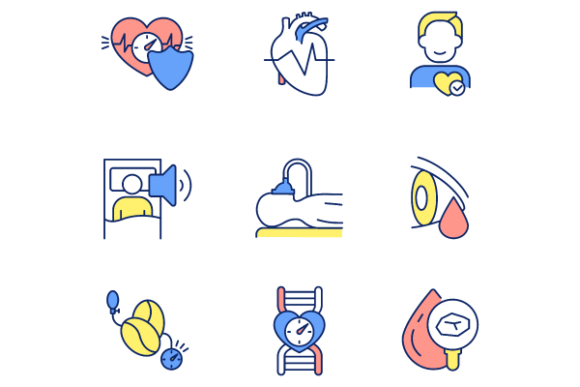
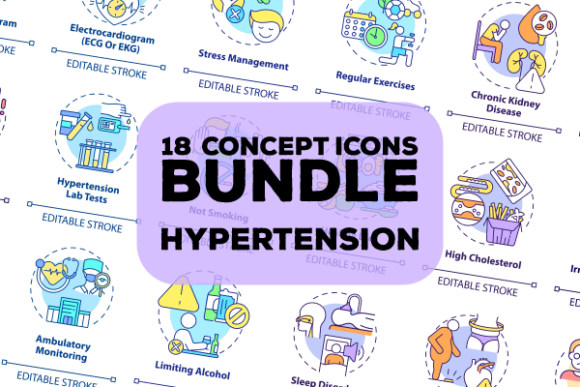
The Hypertension Concept Icons Bundle is a curated set of vector-based graphics focused exclusively on high blood pressure and related health concepts. Unlike generic medical icon packs that cover broad anatomical systems or general hospital equipment, this collection targets a specific pathology. The visual style utilizes thin line art with color accents, a design choice that prioritizes clarity and modern aesthetics over heavy, realistic rendering. Key concepts depicted in the set include severe headaches, obesity and overweight indicators, blood pressure monitoring, and lifestyle factors contributing to cardiovascular strain.
Technically, the bundle is structured to support professional workflows. It includes editable stroke vectors, allowing designers to adjust line weight to match existing brand guidelines or interface requirements. The availability of multiple file formats—JPEG, AI, PNG, EPS, and SVG—ensures compatibility across various platforms, from print brochures to responsive web design and mobile app screens. This multi-format approach reduces the need for manual conversion, streamlining the integration process for users who require immediate deployment.
Primary Use Cases and Strategic Fit
Evaluating whether this bundle is necessary involves assessing the specific nature of your design project. The Hypertension Concept Icons Bundle is particularly strong in scenarios where visual consistency and thematic focus are paramount. Educational infographics explaining the pathophysiology of high blood pressure benefit significantly from the cohesive style of the set. When illustrating a sequence of symptoms or risk factors, using icons from the same family ensures that the visual language remains uniform, which aids in cognitive processing for patients and readers.
Mobile health applications and telemedicine interfaces also represent a strong fit for this collection. The thin line aesthetic is optimized for smaller screens where heavy lines can appear cluttered or pixelated. Furthermore, the inclusion of specific concepts like "severe headaches" and "being overweight" addresses common user queries and symptom checkers found in digital health tools. For designers working on patient portals or wellness tracking apps, having pre-made, medically relevant assets saves significant time compared to commissioning custom illustrations for each individual concept.
Benefits of Specialized Vector Assets
The primary advantage of selecting a specialized bundle over general stock imagery is relevance. Generic medical icons often lack the nuance required to distinguish between different types of cardiovascular issues. By focusing specifically on hypertension, this bundle provides metaphors and symbols that have been vetted for this particular context. The editable stroke feature adds a layer of practical value; if a project requires a bolder look for accessibility compliance or a finer line for minimalist branding, the source files allow for non-destructive adjustments.
Additionally, the provision of isolated outline drawings facilitates easy compositing. Designers do not need to spend hours removing backgrounds or masking complex images. The vector isolation means these icons can be placed over colored backgrounds, photographs, or textured layouts without visual artifacts. This flexibility is crucial for brochure templates and infographic elements where background colors may change frequently during the revision process. The time saved on asset preparation directly translates to more time available for layout refinement and content verification.
Tradeoffs and Considerations
Despite its advantages, the Hypertension Concept Icons Bundle has limitations that must be weighed during the selection process. The most significant tradeoff is scope. If a project covers general cardiology, diabetes management, or broader internal medicine topics, this bundle alone will be insufficient. Relying solely on a niche pack may force designers to mix styles when they inevitably need to source additional icons elsewhere, potentially resulting in a disjointed visual experience.
Another consideration is the stylistic commitment. Thin line illustrations are currently popular in UI/UX design, but they may not suit every demographic or medium. For printed materials intended for elderly populations with visual impairments, extremely thin lines might lack sufficient contrast or legibility. While the strokes are editable, there is a limit to how much they can be thickened before the icon loses its intended proportions. Users must evaluate their target audience's visual capabilities against the default aesthetic of the bundle.
Furthermore, while the bundle covers core hypertension concepts, it may not address rare complications or highly specific pharmaceutical interventions. Designers working on specialized clinical literature should audit the icon list against their content outline before purchasing to ensure critical gaps do not exist. The bundle is an excellent foundation, but it is not an exhaustive encyclopedia of hypertensive disease states.
Comparing Alternatives and Decision Criteria
When deciding between this bundle and alternative solutions, consider the volume of required assets and the project timeline. Custom illustration offers perfect alignment with brand identity and specific medical accuracy but comes at a higher cost and longer lead time. If the project budget is limited or the deadline is imminent, the Hypertension Concept Icons Bundle provides a viable middle ground between generic stock art and bespoke design.
Conversely, subscription-based icon libraries offer vast breadth but often lack depth in specific medical niches. A general library might have fifty "heart" icons but only two that accurately represent hypertension-related obesity. If your project demands semantic precision regarding high blood pressure, a dedicated bundle often outperforms a generalized search. However, if you anticipate needing diverse medical icons across multiple specialties over the coming year, a subscription service might offer better long-term value despite being less specialized.
Making the Final Selection
Ultimately, the decision to acquire the Hypertension Concept Icons Bundle should be driven by project alignment rather than asset quantity. Review the specific concepts included—such as severe headaches and obesity markers—and verify they map directly to your content strategy. Confirm that the file formats (AI, EPS, SVG, PNG, JPEG) integrate seamlessly with your current software stack. Assess whether the thin line color style complements your existing design system or if the editable strokes provide enough flexibility for adaptation.
For designers and agencies producing hypertension-focused content, this bundle represents a practical efficiency tool. It reduces the friction of sourcing accurate medical visuals and maintains a professional standard suitable for both digital and print environments. By carefully evaluating these factors against your specific goals, you can determine if this collection is the right component for your next healthcare design initiative. BSD studio provides a variety of products and file types, ensuring that professionals can find relevant resources to maintain quality while optimizing workflow efficiency.