Evaluating the Google Slides Template - Lambent for Professional Presentations
In the landscape of digital presentation assets, finding a balance between aesthetic appeal and functional utility is often the primary challenge for professionals. The Google Slides Template - Lambent emerges as a notable option for users who require a sophisticated visual framework without sacrificing editability. While originally conceptualized with high-fashion and editorial layouts in mind, its structural versatility allows it to serve a much broader spectrum of professional needs. For entrepreneurs, marketers, and creatives aged 20 to 50, the value of such a template lies not merely in its surface-level design but in its underlying architecture. Understanding the specific capabilities and limitations of this asset is essential for determining whether it aligns with your current workflow and long-term presentation goals.
Core Characteristics and Structural Integrity
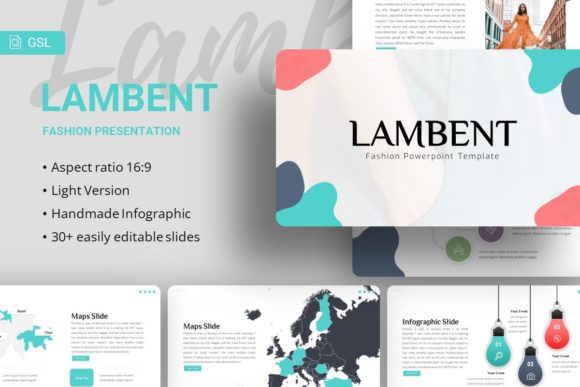
The defining feature of the Lambent template is its comprehensive library of 35 unique slides. In practical terms, this volume provides sufficient variety to construct a complete narrative arc—from introduction and problem statement to solution, portfolio showcase, and closing remarks—without necessitating external design work. Unlike simpler templates that offer only five or six layout variations, Lambent reduces the friction of content expansion. Users can maintain visual consistency across a lengthy deck because the design system is robust enough to handle diverse content types while retaining a cohesive identity.
A critical technical advantage is the reliance on Master Slides. Many lower-quality templates apply formatting directly to individual slides, making global changes a tedious, manual process. Lambent’s adherence to master slide architecture means that adjustments to color palettes, typography, or logo placement propagate instantly across the entire presentation. This is a significant time-saver for agencies or corporate teams managing multiple decks under a unified brand guideline. Furthermore, the inclusion of handcrafted infographics distinguishes this template from generic alternatives. These are not static images but editable vector-based elements within PowerPoint, allowing users to modify data visualization to reflect accurate metrics rather than being locked into placeholder graphics.
Versatility Across Professional Domains
Although marketed with an emphasis on fashion and creative portfolios, the Google Slides Template - Lambent demonstrates remarkable adaptability for non-aesthetic industries. The clean lines and generous use of whitespace make it suitable for corporate profiles and business pitch decks where clarity is paramount. For startups, the template offers structured layouts for team introductions, market analysis, and financial projections that avoid the cluttered look of traditional corporate themes. The minimalist aesthetic ensures that the content remains the focal point, which is crucial when presenting to investors or stakeholders who prioritize substance over style.
For photographers and creative agencies, the template functions as intended, providing image-heavy layouts that respect aspect ratios and visual hierarchy. However, its utility extends to educators and bloggers who need to present complex information in an engaging format. The picture placeholders utilize a drag-and-drop functionality that streamlines the population of visual content. This feature is particularly valuable for freelancers and small business owners who may lack dedicated design support; it allows for rapid iteration and customization without requiring advanced graphic design skills. The ability to resize and edit all graphics ensures that the template does not impose rigid constraints on the user's specific content requirements.
Technical Usability and File Management
When evaluating digital assets, the quality of documentation and file organization is as important as the visual output. Lambent includes a dedicated documentation file, which serves as a user manual for navigating the template’s features. This reduces the learning curve associated with mastering the master slides and infographic editing tools. The package also includes vector icons, eliminating the need to source third-party assets that might clash with the presentation’s visual language. Having these resources bundled together ensures stylistic consistency and saves time during the asset gathering phase.
It is important to note the distinction regarding preview images. As stated in the product specifications, all images used in the demo are for preview purposes only and are not included in the downloadable files. While this is standard industry practice due to licensing restrictions, users must be prepared to supply their own high-quality photography. The template’s effectiveness is heavily dependent on the quality of user-supplied assets; placing low-resolution or poorly composed images into Lambent’s refined layouts will diminish the overall professional impact. Therefore, this template is best suited for users who already possess a library of visual assets or have the budget to acquire them.
Practical Considerations and Limitations
While the Google Slides Template - Lambent offers substantial value, prospective users should approach it with realistic expectations. The "pixel-perfect" nature of the illustrations implies a high degree of precision, but this also means that drastic alterations to slide proportions or layout structures may require careful adjustment to maintain alignment. Users accustomed to breaking grids or employing chaotic design styles may find the template’s structured elegance restrictive. It is designed for order and clarity, not experimental abstraction.
Additionally, while the template is compatible with Google Slides, some advanced PowerPoint-specific features, particularly complex vector manipulations or specific animation triggers, may behave differently when converted to cloud-based formats. Professionals working exclusively in Google Slides should test the master slide functionality immediately upon import to ensure compatibility with their specific workspace settings. For those working primarily in Microsoft PowerPoint, the .PPTX file provides native support for all advertised features. Understanding this platform nuance is vital for avoiding frustration during the production phase.
Assessing Long-Term Value and ROI
For professionals who frequently produce presentations, the return on investment for a premium template like Lambent is calculated in hours saved and brand perception enhanced. Creating 35 distinct, professionally designed slides from scratch typically requires dozens of hours of design labor or significant financial expenditure on custom services. By utilizing this template as a foundational asset, users can redirect resources toward content strategy and rehearsal rather than pixel-pushing. The reusability of the master slide system further amplifies this value over time; once customized to match a specific brand identity, the template becomes a proprietary tool for future communications.
The template also mitigates the risk of inconsistent branding, a common issue in organizations where multiple team members create decks independently. By establishing Lambent as a standardized base, teams can ensure that every output meets a baseline quality threshold. This reliability is particularly beneficial for client-facing roles where presentation quality reflects directly on service competence. Whether used for a one-time pitch deck or as an ongoing corporate communication standard, the template provides a scalable solution that grows with the user’s needs.
Determining Fit for Your Specific Workflow
Ultimately, the decision to adopt the Google Slides Template - Lambent should be based on a clear assessment of your current pain points. If your primary struggle is a lack of visual variety or inconsistent formatting across slides, this template addresses those issues directly through its extensive slide library and master slide architecture. If you require a polished, modern aesthetic that bridges the gap between creative portfolio and corporate report, Lambent occupies that niche effectively. However, if your needs are strictly utilitarian or highly technical, a more data-centric template might be preferable.
Professionals should also consider their own comfort level with presentation software. While Lambent is designed to be easy to customize, maximizing its potential requires a basic understanding of slide masters and vector editing. Those willing to invest a brief period in learning these features will unlock the full value of the asset. For serious hobbyists, educators, and business owners looking to elevate their visual communication without hiring a designer, Lambent represents a pragmatic middle ground between free generic templates and expensive custom design services. Its strength lies in its ability to provide a professional container for your ideas, allowing the content itself to resonate with clarity and impact.